
In the long history of Formula 1, dominance is often measured by trophies and titles. But true engineering “magic” happens when a team discovers a loophole or invents a technology that gives them an absurd, almost unfair advantage in one specific department.
While the modern era is defined by the Red Bull RB19’s relentless race pace, looking back at the history books reveals some truly “cheat code” cars that left the rest of the grid looking like they were in a different category altogether.
1. The 2014 Mercedes Engine: The Hidden “Sport Mode”
When the hybrid era began in 2014, Mercedes didn’t just have a better engine; they had a monster. Insiders have since revealed that the team actually had to turn down their power in the early races to avoid being penalized or scrutinized by the FIA.
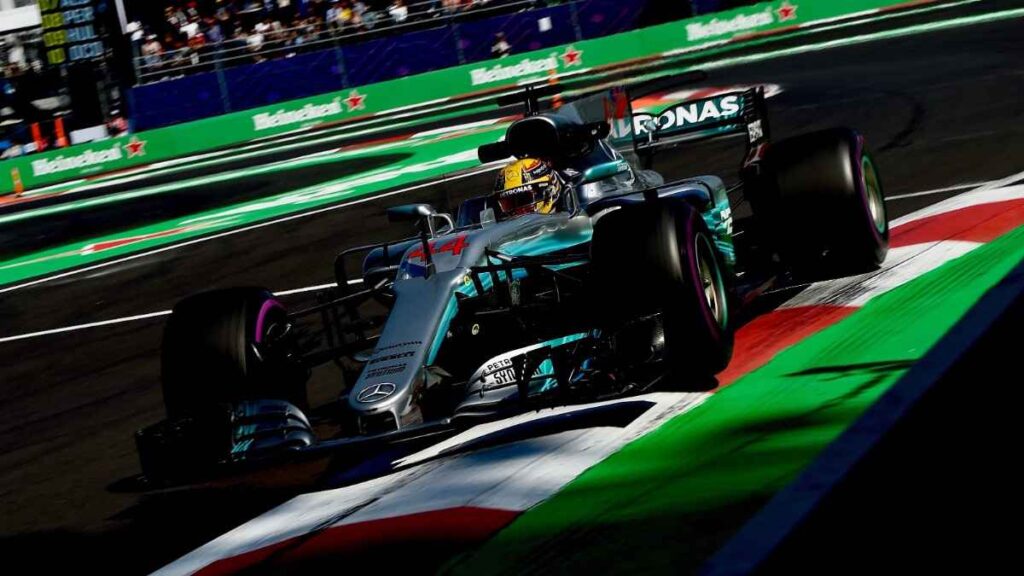
In Bahrain that year, after a late safety car, the two Mercedes cars pulled an incredible 8-second gap on the rest of the field in just two laps. While customer teams used the same Mercedes engines, the works team kept the most aggressive engine maps to themselves, effectively running the competition on “eco-mode” while they played in “sport.”
2. The Williams FW15C: The Electronic “Spaceship”
To many engineers, the 1993 Williams-Renault FW15C remains the most technically advanced F1 car ever built. It wasn’t just fast; it was a rolling computer. It featured:
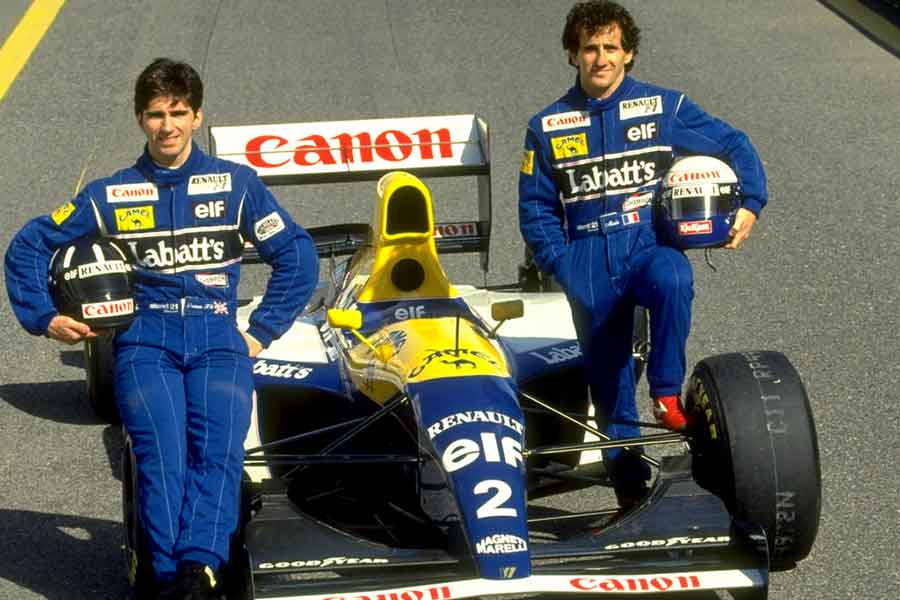
- Active Suspension: The car adjusted its ride height corner-by-corner.
- Traction Control & ABS: Making it nearly impossible to spin or lock a tire.
- The “Diffuser Stall” Button: A push-to-pass button that stalled the rear aero to gain massive straight-line speed. It was so dominant that the FIA eventually had to ban almost all of its “electronic aids” to save the sport.
3. The Brawn BGP 001: The Great “Double Diffuser” Distraction
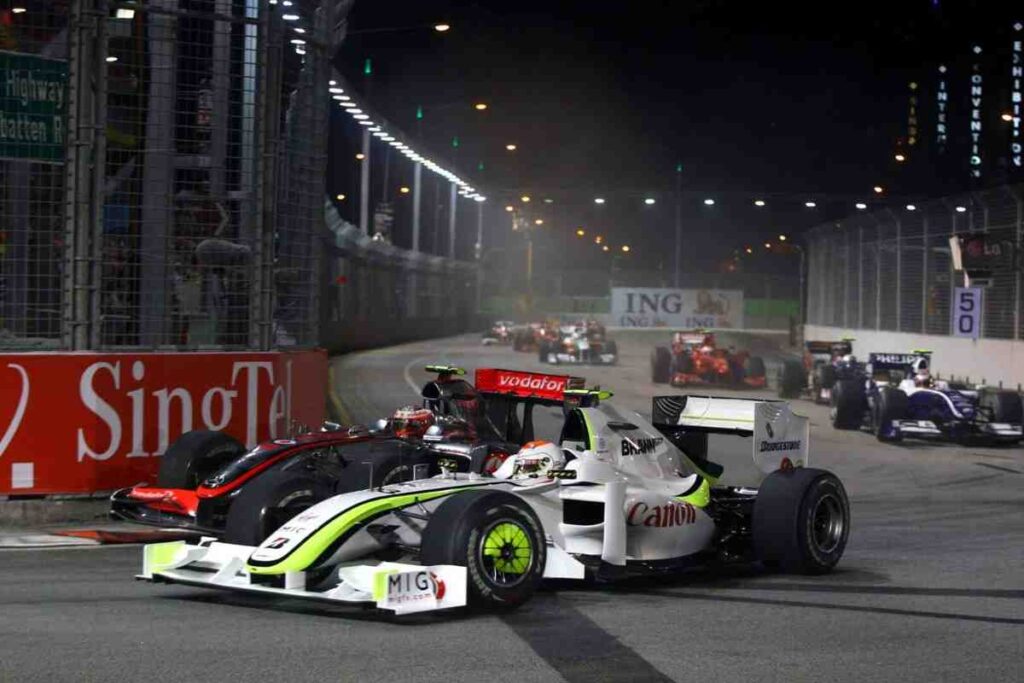
The Brawn GP story is legendary, but there’s a secret to their 2009 dominance. While the world was focused on their controversial Double Diffuser, the car’s real “secret sauce” was its outwash front wing.
Brawn engineers were perfectly happy to let other teams waste time arguing about the diffuser while they kept their revolutionary front-wing philosophy under wraps. This allowed Jenson Button to win six of the first seven races before the rest of the grid could catch up.
4. The Brabham BT46B: The “Fan Car”
In 1978, Brabham took an absurd approach to ground effect by mounting a massive fan to the back of the car. Officially, it was for “cooling,” but in reality, it sucked the car to the track. It was so fast that Niki Lauda won its debut race by over 30 seconds. Fearing the car would be banned or cause a riot among other owners, Brabham voluntarily withdrew it after just one race. It remains the only F1 car with a 100% win record.
5. The “Party Mode” Mercedes W11
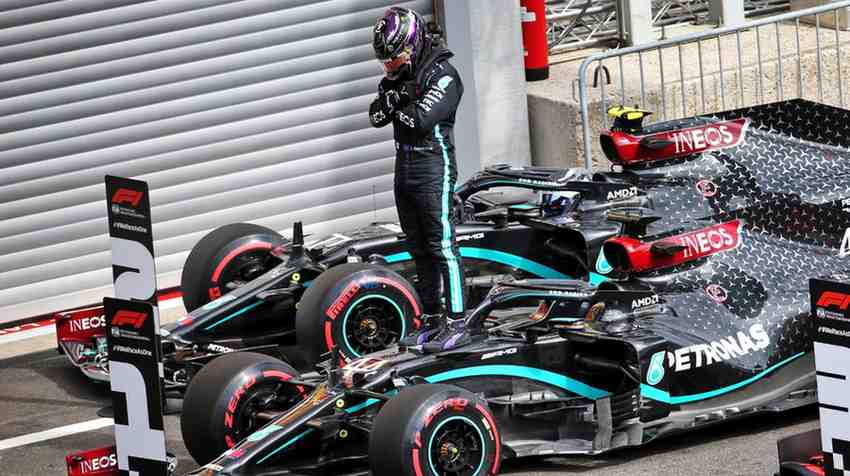
Fast forward to 2020, and Mercedes produced the W11—often called the fastest F1 car in history. Its specific advantage? Qualifying “Party Mode.” The car could extract a level of one-lap performance that made pole position a foregone conclusion. When the FIA banned those engine modes, Mercedes simply introduced DAS (Dual-Axis Steering), allowing the driver to pull the steering wheel to adjust the toe of the front tires. It was “on rails” in a way no other car has been since.
F1 Stats Last Updated: May 3, 2026 | All statistics, lap times, and driver comparisons on this page reflect the most current data available from the official F1 sources. And updated till the last race which happened in 3 May 2026