
F1 World Championships Won is the ultimate measure of success in Formula 1, highlighting the drivers who have dominated entire seasons. This page presents complete data on F1 World Championships Won from 2000 to 2026, including total titles, wins, points, and race statistics for the sport’s most successful drivers.
Winning a title requires consistent performance across an entire season, combining race wins, points scoring, and reliability.
From legendary champions like Lewis Hamilton and Michael Schumacher to modern stars like Max Verstappen, championship titles define the greatest drivers in Formula 1 history.
This page presents all-time championship winners from 2000 to present, along with wins, points, and race statistics.
#
Driver
Team
Championships
Wins
Points
Races
🥇
Ferrari
7 🏆
106
5,217.5
395
🥈
Ferrari
5 🏆
56
996.0
180
🥉
Red Bull
4 🏆
71
3,607.5
248
4
BMW Sauber
4 🏆
53
3,098.0
300
5
Aston Martin
2 🏆
32
2,396.0
426
6
Mercedes
1 🏆
8
452.0
39
7
Brawn Mercedes
1 🏆
15
1,235.0
306
8
McLaren Mercedes
1 🏆
21
1,873.0
351
9
McLaren
1 🏆
13
1,616.0
167
10
Williams
1 🏆
23
1,594.5
206
All-Time F1 World Champions (2000–Present)
| Rank | Driver | Championships | Wins | Points | Races |
|---|---|---|---|---|---|
| 1 | Lewis Hamilton | 7 | 105 | 5,045.5 | 382 |
| 2 | Michael Schumacher | 5 | 56 | 996.0 | 180 |
| 3 | Max Verstappen | 4 | 71 | 3,452.5 | 235 |
| 4 | Sebastian Vettel | 4 | 53 | 3,098.0 | 300 |
| 5 | Fernando Alonso | 2 | 32 | 2,393.0 | 413 |
| 6 | Andrea Kimi Antonelli | 1 | 1 | 193.0 | 26 |
| 7 | George Russell | 1 | 6 | 1,076.0 | 154 |
| 8 | Jenson Button | 1 | 15 | 1,235.0 | 306 |
| 9 | Kimi Räikkönen | 1 | 21 | 1,873.0 | 351 |
| 10 | Lando Norris | 1 | 11 | 1,442.0 | 154 |
| 11 | Nico Rosberg | 1 | 23 | 1,594.5 | 206 |
Championship Trends (2000–Present)
- A small group of drivers dominates the majority of championships
- Multi-title winners define specific eras in Formula 1
- Winning multiple championships requires both consistency and team performance
- New champions continue to emerge, but dominance is often concentrated
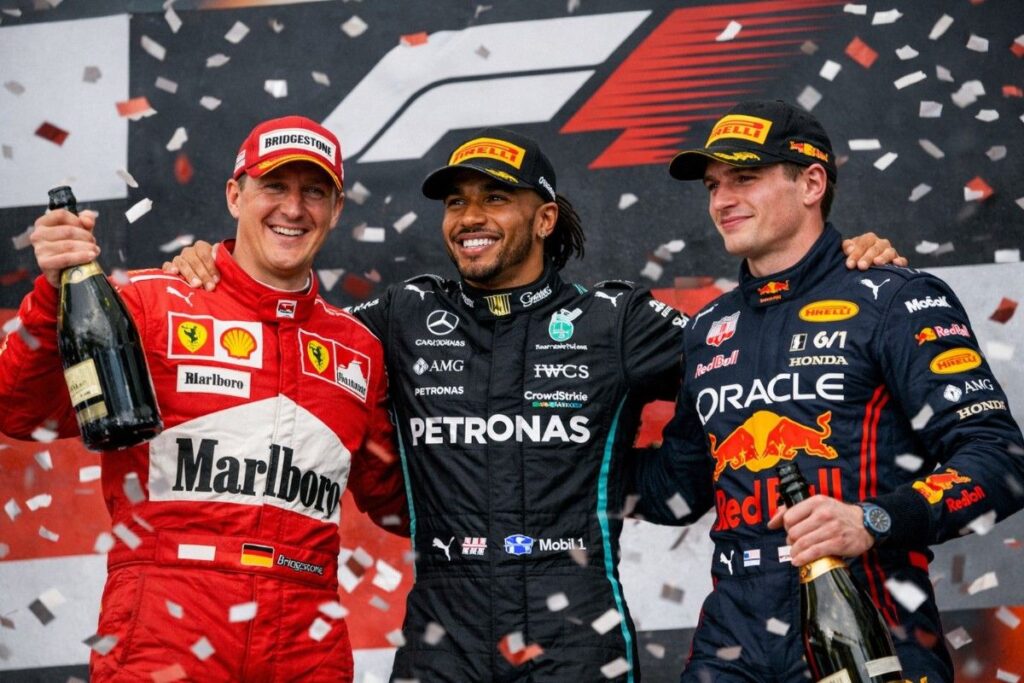
Driver Comparison: Championship Leaders
| Driver | Titles | Key Strength |
|---|---|---|
| Hamilton | 7 | Long-term consistency |
| Schumacher | 5 | Era dominance |
| Verstappen | 4 | Modern performance |
| Vettel | 4 | Peak dominance period |
Why Championships Matter in F1
World Championships represent:
- Season-long consistency
- Ability to perform under pressure
- Team and car superiority
- Strategic excellence across races
Winning a championship is considered the highest achievement in Formula 1.
Frequently Asked Questions (FAQ)
Who has the most F1 World Championships?
Lewis Hamilton leads this dataset with 7 titles.
How many championships does Max Verstappen have?
Max Verstappen has 4 championships.
Are championships more important than race wins?
Yes, championships reflect performance across an entire season, not just individual races.
How many drivers have won multiple championships?
Only a few drivers in this dataset have won more than one title, showing how difficult it is to dominate in F1.
Conclusion
World Drivers’ Championships remain the ultimate benchmark of success in Formula One. From the dominance of Lewis Hamilton to the rise of Max Verstappen, these records define the greatest eras and drivers in the sport.
As competition continues to evolve, winning multiple championships will remain one of the toughest achievements in Formula 1.
Key Takeaways & Summary
- Lewis Hamilton leads with 7 World Championships, making him the most successful driver in this dataset.
- Michael Schumacher follows with 5 titles, showing strong dominance during his era.
- Max Verstappen and Sebastian Vettel both have 4 championships, placing them among the top modern-era drivers.
- Fernando Alonso has 2 titles, while multiple drivers have secured a single championship.
- The dataset shows a clear gap between multi-title champions and single-title winners, highlighting sustained dominance at the top.
- Drivers with more championships generally also have higher wins, points, and race totals, indicating long-term competitiveness.
Other :-
F1 Stats Last Updated: September 30, 2026 | All statistics, lap times, and driver comparisons on this page reflect the most current data available from the official F1 sources. And updated till the last race which happened in 30 SEP 2026